

How do you build a brand that people do not just use, but truly love?
In the modern business landscape, that is the ultimate question. The answer, however, depends entirely on who you ask. If you ask a master of physical retail and emotional brand-building, they will point you toward the community, experiential spaces, and deep-seated customer loyalty. If you ask a Silicon Valley product visionary, they will talk about frictionless user experiences, network effects, and leveraging algorithmic intelligence to curate the human experience.
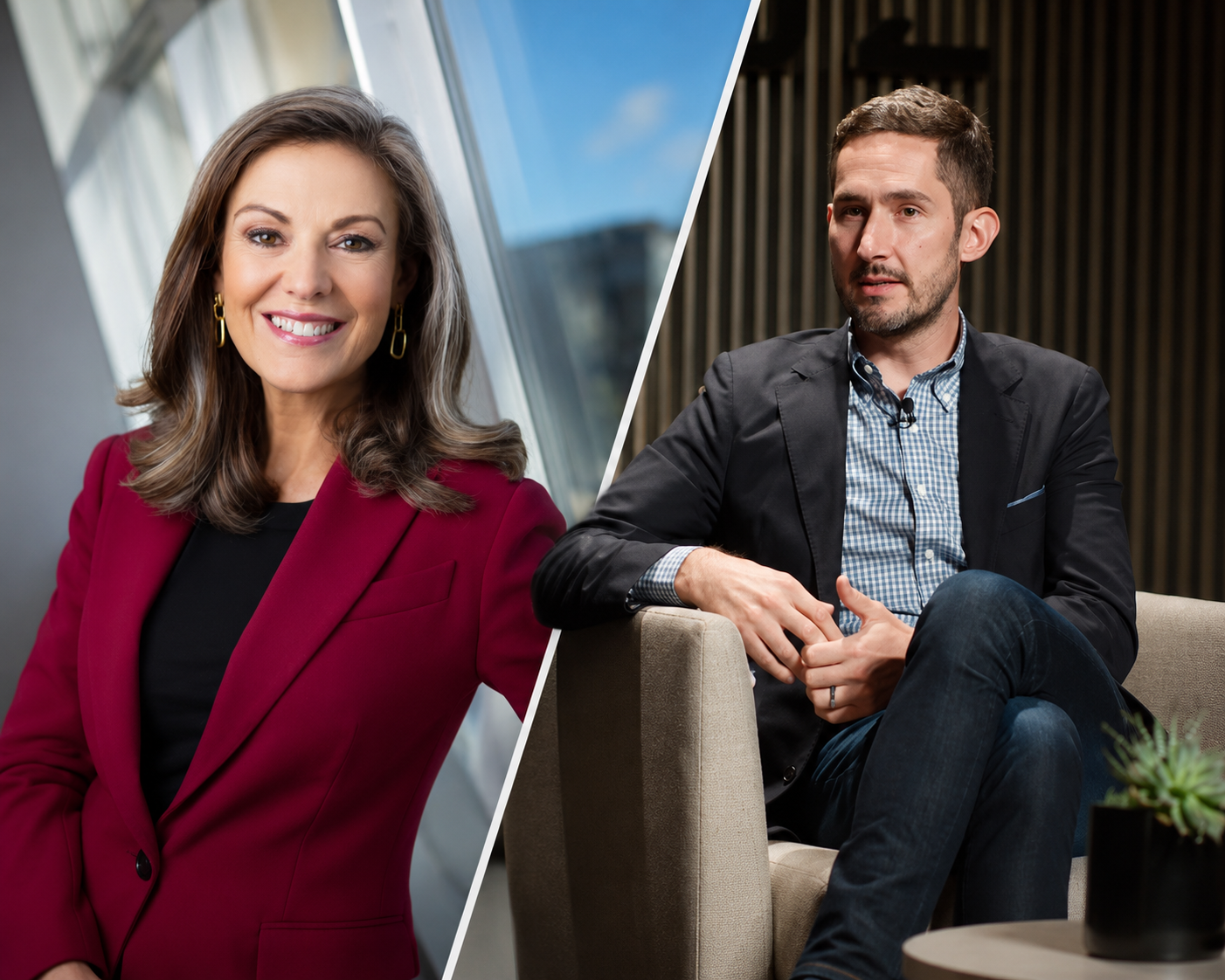
These two opposing yet highly complementary philosophies are perfectly embodied by two of the most influential business leaders of our generation: Mary Dillon and Kevin Systrom.
While Mary Dillon has spent decades dominating the retail sector by revitalizing legacy brands and turning brick-and-mortar stores into cultural destinations, Kevin Systrom redefined how the world communicates by co-founding Instagram and continuously pushing the boundaries of consumer software and artificial intelligence.
Though they operate in vastly different environments, their respective playbooks offer invaluable lessons for anyone looking to build, scale, and sustain a high-impact business. This is a deep-dive analysis of how their leadership styles, strategic decisions, and core philosophies have shaped modern commerce and technology.
Part 1: Mary Dillon — The Queen of Consumer Connection and Retail Reinvigoration
[Mary Dillon’s Retail Strategy]
│
┌────────────────┴────────────────┐
▼ ▼
[The Human Element] [Data-Driven Personalization]
• Frontline empowerment • Ultamate Rewards (21.7M+ members)
• Experiential, warm stores • Individualized loyalty incentives
• Inclusive curation • Omnichannel digital integration
To understand how to captivate the modern consumer, one must study Mary Dillon. Renowned as one of only a handful of female executives to lead multiple Fortune 500 companies, Dillon has built a reputation as a retail revitalizer. Her career spans legendary marketing and executive roles at PepsiCo (where she was President of Quaker Foods), McDonald’s (as Global Chief Marketing Officer), US Cellular, Ulta Beauty, and Foot Locker.
Her leadership style rejects the traditional, cold corporate playbook. Instead, Dillon prioritizes empathy, frontline empowerment, and a relentless focus on the end consumer.
The Masterclass at Ulta Beauty
When Dillon took over as CEO of Ulta Beauty in July 2013, the brand was successful but suffered from a bit of an identity crisis. To many consumers, Ulta was associated with strip malls and discount cosmetics. It lacked the prestige and cool factor of its main rival, Sephora.
Dillon did not just tweak the existing model; she completely rebuilt how people thought about buying beauty products. Her strategy rested on three core pillars:
- Democratic Beauty Curation: Historically, beauty retail was highly segregated. You either went to a department store for high-end luxury makeup or a drugstore for budget cosmetics. Dillon broke these barriers down by housing prestige brands (like MAC and Clinique) alongside affordable mass-market items in the same brightly lit, welcoming aisle.
- Experiential Retail: Dillon recognized that physical retail is not dead; boring retail is. Under her tenure, Ulta expanded its in-store salon services, offering hair, brow, and skin treatments. This transformed a simple errand into an interactive, self-care experience.
- The Ultamate Rewards Engine: Rather than relying on generic, margin-eroding coupons, Dillon doubled down on the company’s loyalty program, Ultamate Rewards. She grew the program to over 21 million active, highly engaged members. Crucially, she used this data to personalize offers. If the data showed you loved a specific skincare ingredient, you didn’t get a generic 15% coupon; you received a personalized gift or targeted recommendation that deepened your emotional connection to the retailer.
The results of Dillon’s eight-year tenure speak for themselves:
- Market Capitalization: Tripled to over $18 billion.
- Annual Revenues: Skyrocketed from $2.2 billion to $8.5 billion.
- Store Footprint: More than doubled, expanding from roughly 500 locations to over 1,200.
- Sales Impact: The loyalty program grew to generate over 90% of the company’s total sales.
The Turnaround at Foot Locker
Following her historic run at Ulta, Dillon stepped in as the President and CEO of Foot Locker in 2022. The athletic retailer was facing intense headwinds, primarily driven by major athletic brands (like Nike) shifting toward a direct-to-consumer model, reducing their wholesale reliance on third-party malls.
Dillon launched her “Lace Up” strategic initiative, applying many of the same principles that worked at Ulta:
- Moving stores out of declining suburban malls into high-traffic, off-mall community concepts.
- Re-negotiating and strengthening vendor relationships to secure exclusive product lines.
- Rebuilding the brand’s loyalty program and e-commerce infrastructure to create a seamless online-to-offline shopping journey.
Through every career transition, Dillon has demonstrated that a business cannot survive on spreadsheets alone. To scale, a brand must cultivate a warm, inclusive, and deeply human culture where both retail associates and customers feel valued.
Part 2: Kevin Systrom — The Master of Visual Storytelling and Product Scale
[Kevin Systrom’s Product Strategy]
│
┌─────────────────────┴─────────────────────┐
▼ ▼
[Simplicity & Design] [Algorithmic Curation]
• Frictionless features (e.g., filters) • Tailored feeds (recommender engines)
• Solving immediate user pain points • Combatting information noise/clickbait
• Ruthless MVP execution • Scalable network-driven mechanics
While Mary Dillon was mastering the physical shopping cart, Kevin Systrom was redefining the digital landscape. As a computer programmer, entrepreneur, and the co-founder of Instagram, Systrom represents the pinnacle of product-led growth. His approach to business is rooted in design simplicity, perfect market timing, and an obsession with solving user friction.
The Genesis of Instagram
In 2010, the mobile application landscape was cluttered. Systrom, alongside co-founder Mike Krieger, initially built a location-based check-in app called Burbn. The app was overly complicated, packed with features that users found confusing.
Instead of trying to force a bloated product onto the market, Systrom analyzed user behavior. He noticed that while people rarely used Burbn’s check-in features, they were obsessed with sharing photos. Systrom famously stripped away every single feature of Burbn except for photos, comments, and likes.
He then solved three critical pain points that plagued mobile photography in 2010:
- Bad Cameras: iPhone cameras at the time were mediocre. Systrom introduced stylized photo filters, instantly turning amateur snapshots into beautiful, nostalgic art.
- Slow Upload Speeds: Uploading photos on 3G networks was painfully slow. Instagram solved this by beginning the upload process while the user was writing their caption, making the post appear instantaneous upon tapping “Share.”
- Distribution Friction: Instagram made it incredibly easy to cross-post photos to Twitter, Facebook, and Tumblr with a single tap, piggybacking on existing networks to drive its own viral growth.
The execution was flawless. On its first day, 25,000 users downloaded the app. By 2012, with just 13 employees, Instagram was acquired by Facebook for $1 billion—a figure that turned heads at the time but proved to be one of the greatest tech acquisitions in history. Under Systrom’s continued leadership as CEO, the platform scaled to over 1 billion monthly active users before his departure in 2018.
Life After Instagram: RT.live and Artifact
After leaving Meta, Systrom did not sit idle. He continued to search for spaces where data and design could solve real-world problems.
During the COVID-19 pandemic, he built RT.live, an open-source tracker that calculated the effective reproduction rate of the virus in real-time across every state, helping the public and policymakers make safer decisions.
In 2023, Systrom and Krieger reunited to launch Artifact, an AI-powered news aggregator and social discovery app. Affectionately dubbed “TikTok for text,” Artifact leveraged advanced machine learning recommender systems to curate a hyper-personalized news feed based on an individual’s reading habits, topics, and authors of interest.
The product introduced highly innovative features, including:
- AI Summarization: Condensing long, complex news stories into easily digestible bullet points.
- Clickbait Defense: Tools that automatically rewrote sensationalized or misleading headlines flagged by users.
- Social Graph Integration: Allowing users to post links, articles, and thoughts, building a community of readers.
Although the standalone app was wound down in early 2024 because the independent market opportunity was not large enough to scale globally, its technology was highly sought after. In April 2024, Yahoo acquired Artifact. Yahoo integrated Artifact’s cutting-edge AI personalization engines directly into Yahoo News, proving once again that Systrom’s product-first, algorithmically-driven philosophy holds massive systemic value.
Part 3: The Comparative Playbook — Retail Execution vs. Tech Disruption
To truly understand how these two leaders operate, we must look at their core business strategies side-by-side. While their industries are different, the underlying logic of how they build value is remarkably clear.
| Strategic Dimension | Mary Dillon (Retail & Consumer Strategy) | Kevin Systrom (Tech & Product Innovation) |
| Core Business Philosophy | Human-centric and experiential. Value is built through emotional connection, physical community, and frontline service excellence. | Product-centric and frictionless. Value is built through clean design, stellar engineering, and viral network effects. |
| Scale Mechanism | Operational expansion. Doubling physical store locations, expanding product categories, and scaling regional supply chains. | Software scalability. Creating platform loops, algorithm-driven feeds, and utilizing cloud infrastructure for exponential growth. |
| Use of Data | Customer loyalty databases. Tracking buying habits through membership cards to deliver highly personalized promotions and curation. | Machine learning & AI. Building advanced recommender engines to curate feeds, predict engagement, and tailor text or media content in real-time. |
| Handling Failure | Adapting to macro shifts. Pivoting to direct-to-consumer models, adjusting physical footprints, and transitioning traditional models online. | The Pivot. Stripping away bloated code, winding down standalone apps to sell or license core AI technology, and iterating fast. |
| Leadership Superpower | Cultural transformation. Fostering an inclusive workspace, elevating hourly employees, and aligning diverse executive teams. | Design intuition. Recognizing user pain points before the user can articulate them and executing elegant, simple interfaces. |
Part 4: The Strategic Convergence — Why Modern Brands Need Both Playbooks
Historically, the retail world and the technology world operated in distinct siloes. Tech companies built software, and retail companies sold physical goods. Today, those boundaries have entirely dissolved.
To survive in the current business landscape, a company must master both playbooks. You cannot build a world-class retail operation without outstanding digital infrastructure, and you cannot build a sustainable digital platform without a deeply loyal community.
1. Bringing “Dillon-Style” Empathy to Digital Products
One of the most common pitfalls of modern tech startups is an over-reliance on cold, raw data. Algorithm designers often focus entirely on screen-time metrics, occasionally ignoring the actual emotional state of the user.
If tech companies took a page from Mary Dillon’s book, they would look beyond the numbers. They would focus on “shop-alongs” and deep qualitative customer research. They would ask: Does this feature make the user’s life better, or does it just keep them scrolling out of habit?
By infusing digital platforms with genuine human empathy and building community-focused environments, tech brands can build the kind of long-term loyalty that survives sudden platform shifts and market disruptions.
2. Bringing “Systrom-Style” Frictionless Design to Brick-and-Mortar Retail
Conversely, legacy retailers often struggle because they fail to understand how digital tools can enhance the real-world experience. Walking into a physical store should be as intuitive as opening an app on your phone.
Retailers need to implement Systrom’s ruthless focus on simplicity and ease of use.
- Frictionless Checkout: Just as Instagram made sharing a photo a one-tap process, stores must make buying physical items incredibly simple, whether through mobile self-checkout, integrated mobile wallets, or instant in-store pickup options.
- Algorithmic Personalization in Real Life: Retailers can use machine learning to predict what inventory should be on shelves at any given moment, personalizing physical floor plans and display recommendations to match localized shopping trends, similar to how Artifact tailored daily news feeds.
During her time at Ulta, Dillon did exactly this by introducing the GLAMlab virtual makeup try-on tool. By utilizing augmented reality, she allowed shoppers to instantly see how cosmetics would look on their skin using their smartphone cameras. This perfect marriage of Systrom’s interactive tech design and Dillon’s retail expertise became a massive hit, proving that the digital and physical worlds are at their best when they work together.
The Ultimate Takeaway
Whether you are leading an international retail giant or building the next breakthrough application in a garage, the lessons from Mary Dillon and Kevin Systrom are clear.
Mary Dillon teaches us that business is fundamentally about people. If you build a culture of inclusion, empower your frontline workforce, and create personalized, emotional connections with your customers, your brand will become an irreplaceable part of their lives.
Kevin Systrom teaches us that scale is achieved through elegant simplicity. If you can identify a real, daily human frustration, strip away the noise, design an intuitive solution, and leverage algorithms to personalize that experience, you can capture the attention of the entire world.
True magic happens at the intersection of these two concepts. The next generation of legendary brands will be built by those who can master the digital elegance of Kevin Systrom while maintaining the warm, human heartbeat of Mary Dillon.
